
Catamorphosis: Change and Self - Shannon Knight
9 Apr 2026After I got Covid, I was mostly bedbound for the first two-and-a-half years. There were so many different problems with my body that it would take a long time to describe. Besides needing to be mostly flat to help the blood reach my brain and feet, I also couldn’t think very much. Even my ability to understand or respond to English was limited to about two hours per day.
People use the word ableism so casually and broadly that the true meaning can easily be lost. It’s about judging or valuing someone based on what they are able to do. Our society deeply promotes ableism. We admire people who have achieved great things through their abilities. We could also look at this from the perspective of sheer, stark labor. In a capitalist society, grinding equals success, so people who use every hour for productive purposes, especially for earning money, are also admired. (In my book Domestication, one ableist concept I touch on is whether it really is so admirable to fill your hours with hard labor.)
We center our identities around what we can do. In countries like the USA, we introduce ourselves by identifying our profession. This is the central way we see ourselves. To be more humanistic, though, we identify by other things that we spend our time doing—our hobbies and interests. Someone is an artist or an athlete or an inventor. They hike, paint, play an instrument, learn new languages. But what happens when sickness makes it so that you can no longer do your profession or your hobbies? How can you be a teacher unable to teach, a hiker unable to hike, a musician unable to play? Have you lost your identity as well?
Who even are you without the various ways that you fill your time each day?
So, after I got Covid, I joined an online support group called Body Politic where we could talk with each other in a forum. A very common crisis was the identity crisis. Not helping this problem was the relationship crisis that came hand-in-hand with chronic illness. Friends, family, and partners disappeared. The partners, especially, were a stark blow. Whether they had been married, engaged, living together, or more casual—almost every single partner left once their significant seemed to be staying ill. Many would say that this wasn’t the relationship they’d agreed on. (Marriage vows aside.) Some would say that their partner was no longer the person they’d loved. They had loved the person who was happy and able to do all of these things, including bring in income. So they loved what that person had been able to do rather than who that person really was.
I, too, experienced drastic changes in relationships. But there was one little guy who had no changes of heart at all. That was Gandalfr the Gray, my golden-eyed cat. G had been the neighbor’s cat before he moved himself in with me. He had a kitty bed on my desk where he hung out while I was working at home. He’d greet me when I returned from work. He was ecstatic when the pandemic caused me to stay home all the time. He was very aware of my sickness and how fragile my health became. Nevertheless, he was right there with me. If the human stayed in bed all the time, then G could visit her in bed. He was the one creature who did not see me as changed. I was still his beloved human, like always.
I grew frustrated with myself for not getting better, even though I knew that was ridiculously outside of my control I judged myself, too, wondering if I had lost my self-worth because I was no longer able to do all of those things I used to be so proud of. Meanwhile, G lay there with me. I started seeing all of these connections between us. My first cat revelation was that I would never judge G based on his health or anything else. He was my precious boy. He’d always had a bit of a drooling problem, which grossed some people out, but that was just G’s liquid love. After G received treatment for urinary crystals, he peed the bed regularly till he’d healed up. I cleaned him and his space as well and as quickly as I could with no other thought than for his comfort. My love for him never changed due to his body’s difficulties. Why would it? He was my cuddly little fluff. Did G, because he was a fluffy kitty, have more innate worth than I did? How absurd is that? No. We both have innate worth. We all have innate worth.
My next cat revelation was funnier. It helps if you start by imagining yourself feverishly ill. Your whole world is a fever dream. Okay, next, imagine your body belabored by symptoms beyond doctors’ understanding. Some are normal enough, like fever. Touching G, or any cat, you can feel how hot they are. Cats run at a warmer temperature than humans. If you put your ear against their fluffy, warm body, you’ll hear their little heart beating quickly. Their respiration is rapid, too. I slept a lot. There were different patterns, from sleeping twenty-one hours a day to sleeping three hours on, three hours off, for months—maybe a year or more. Finally, I was unable to sleep after dark. All of my sleep had to occur during daylight. All of these different sleep cycles were unrelated to whether or not I was stuck in bed. Another weird Long Covid symptom is internal vibrations. I could feel my whole body or parts of my body shaking, but if anyone touched me, they couldn’t feel it, and the shaking wasn’t visible. Sometimes it felt like a truck idling outside, and I genuinely had complained about the (non-existent) truck idling night after night outside, not realizing it was my own body. The other vibration type was like purring. Since it was often one part of the body, I would feel my cat pressed against me purring, and only when I reached down to pet him and he wasn’t there, would I realize that it had always been me. So I was feverish, tachycardic with rapid respiration, sleeping day and night, and I had begun purring. I was transforming into a cat!
The cat transformation revelation was wonderfully soothing. I had been very disturbed by my malfunctioning body, but anything related to my G or to cats felt entirely different. The internal vibration symptom being such a complete unknown also meant that it was very unnerving. Covid is a vascular disease with damage to the endothelium, and theories point to endothelial damage or microclots somehow causing the internal vibrations. But cats’ purring is supposed to be soothing, possibly even healing, and the idea that I was doing cat stuff was simply much more fun than the idea that I was dying.
When I wrote Catamorphosis, I brought together many different ideas. I wanted to talk about the loss and fear we feel when our bodies change through sickness or age, but I also wanted to talk about identity. There is this idea of loss or lessening that comes with disability and change. But even as our bodies and even our abilities change, that doesn’t mean that we somehow become less of who we really are. You are you. You can’t stop being you. Change is part of life, and we’re always involved in change to some degree, but we’re always doing that while staying ourselves. As long as there is choice in the matter—and by that, I mean agency to make decisions—we can also always choose to be true to ourselves and, therefore, become more and more who we truly are. Let’s do that together as a society through sickness and health till death do us part.
About Catamorphosis
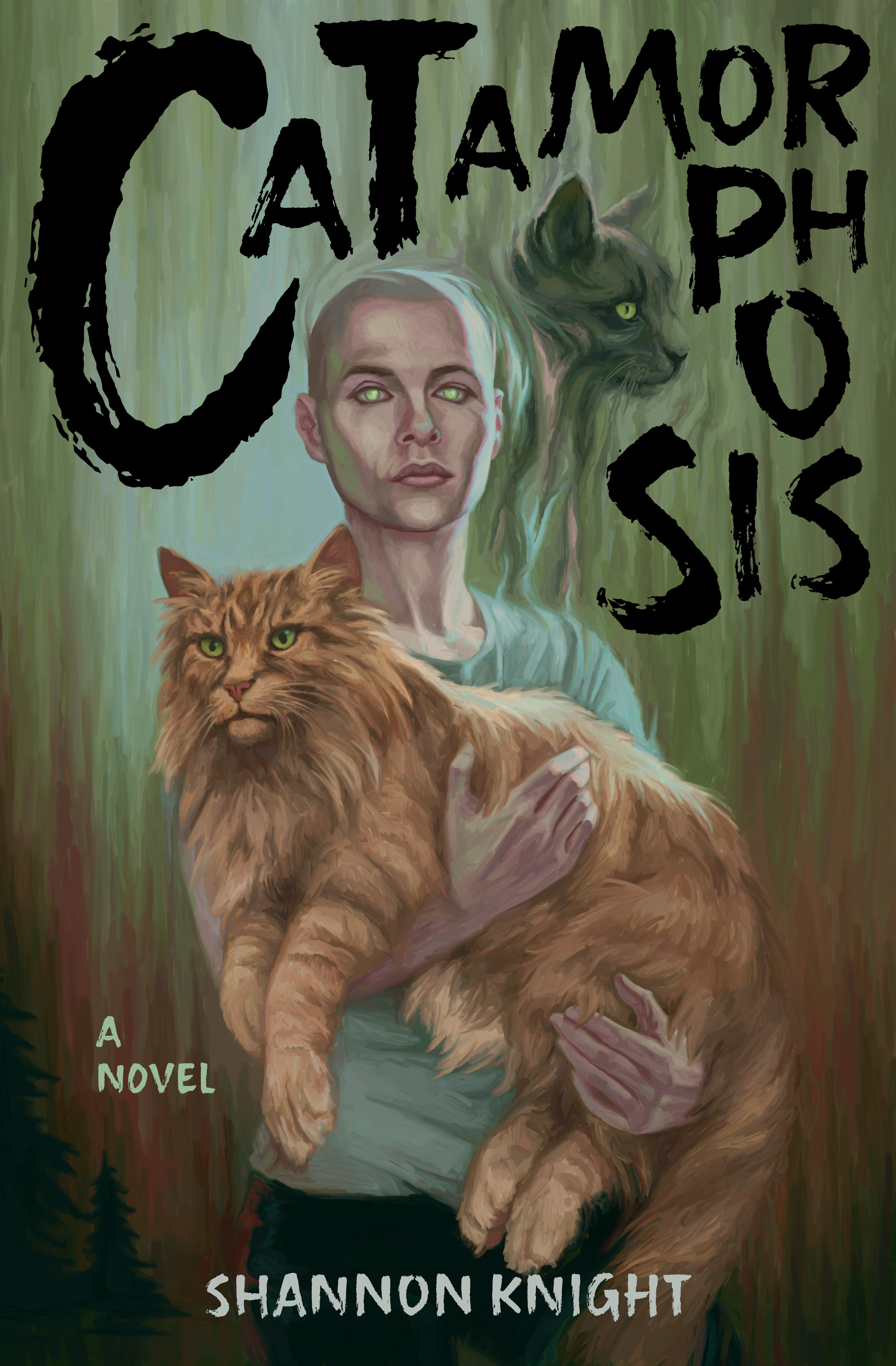
Cancer was the start of Jasmine’s life falling apart. Her body betrayed her, her husband left, and as she lay dying, the only one remaining at her side was her orange tabby, Otto.
Then something uncanny occurred.
. . .
At a fishing lake in the Oregon Coast Range, Jasmine is ready to reassess her priorities when a stranger catnaps Otto. One transgression leads to another, and Jasmine has never believed in turning the other cheek.
Jasmine is transforming, but whether the cancer still has anything to do with her mutating cells is beyond her. Otto has given her something, and anything from her sweet boy can only be a boon.
Jasmine may have died, but she came back.
And when a cat’s around, no one is surprised by a body count.
You can already order the ebook using this link .
If you are a reviewer, there are digital review copies (DRCs) on NetGalley.
About Shannon Knight
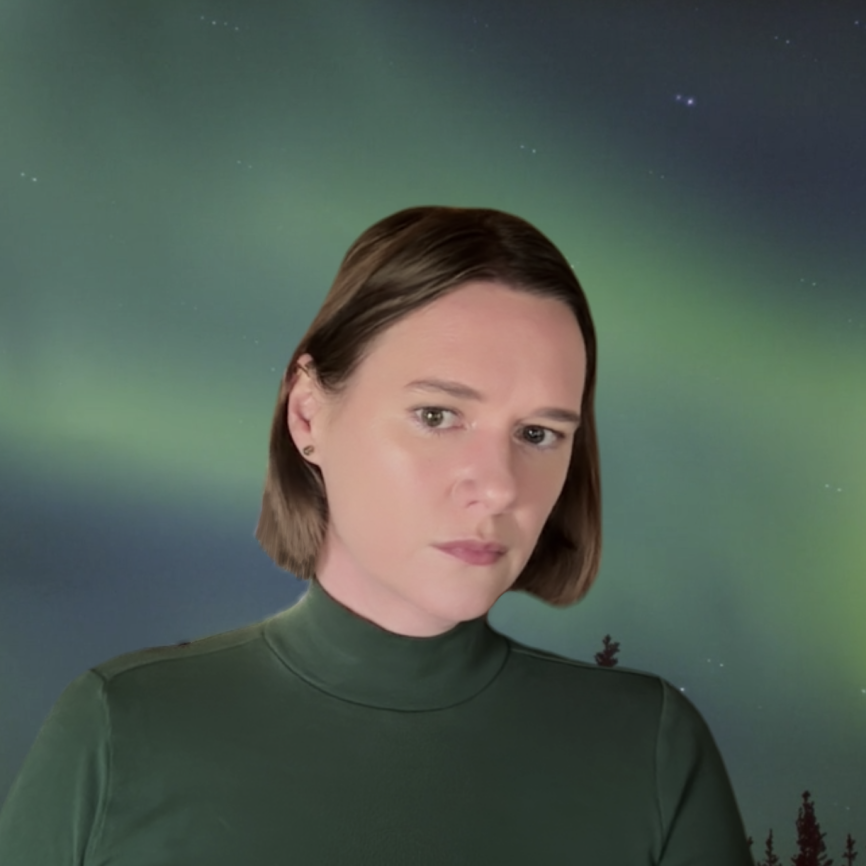
Shannon Knight lives in the Pacific Northwest with the ghost of her cat G and a wild forest creature she calls Little Bat. She writes horror, fantasy, and science fiction. Catamorphosis is her latest release. Sign up for her newsletter at https://shannonknight.net.