
Why I write exclusively in 1st person – Jeremy Szal
14 May 2026For the past ten years, I have exclusively written fiction in first person tense. That includes all books in my space opera trilogy, The Common. When Stormblood was first published, I got a slew of reviews that were surprised by this stylistic choice, especially as I was writing in space opera – a subgenre that is typically characterized by sprawling narratives and a multitude of PoVs, usually in third person.
So why do I do it?
Because when writing, I am primarily interested in exploring character. Who they are. What they want. What drives them emotionally. How do their minds work. I want to show their emotional state, their flaws and their thoughts. I want to sit behind their eyes and experience the world as they do. And I feel that there is no better way to do that than writing it in first person tense.
Of course, that is not to say that you cannot tell a character-driven story in third person. Joe Abercrombie in particular is infuriatingly good at achieving this through character voice.
But unlike third person, first-person allows for a closer degree of intimacy. Here, you are getting what is essentially the narrator’s own experience told to you directly. It is their oral history, “their” diary entries. They are delivering their version of the events - just like I am telling you, dear reader, this right now. This is especially true in audiobooks, where the voice actor literally becomes the narrator.
But with third person, there is a filter. You are technically not reading their words – you are reading what “someone else” has written about them, from a slightly more detached point of view. Because they’re referred to as he/she/they, there’s a slight gap between the character and the reader.
Again, this does not mean that anyone writing in third person is inhibited in what they can achieve. It is simply a technical consequence of the tool being used.
This is especially true for me when I’ve got my writer hat. I am no longer dictating the actions of a character as they go about their adventure. I am the character. I am directly transcribing their thoughts and actions as if they were my own. In writing first-person, I get to be the character. I get to wear their skin, feel what they feel, see what they think. I do not have access to their thoughts – I am their thoughts.
And I love that.
I think it also allows me to sympathise more with the character I’m writing, especially if their morals or decisions or identities differ from mine. I am not an alien, mourning his daughter. I am not a woman who is in love with a non-human male. But here, I can become one. And that forces me to think like them, because you should never seen the hand of the author, only the narrator, so I have to stitch that gap closed.
For me, first-person simply makes a story feel substantially more personal and immediate. Which is why, if I am telling a story that already touches on personal subjects or contains a strong degree of emotional intensity, I would feel inhibited if I were relating the events as if they were not happening to me. It would not feel true.
And at the end of the day, no matter how outlandish or far-flung my stories are, I want them to feel real. I want the characters to feel real, because I know they are.
After all, I have been them.
About Jeremy Szal
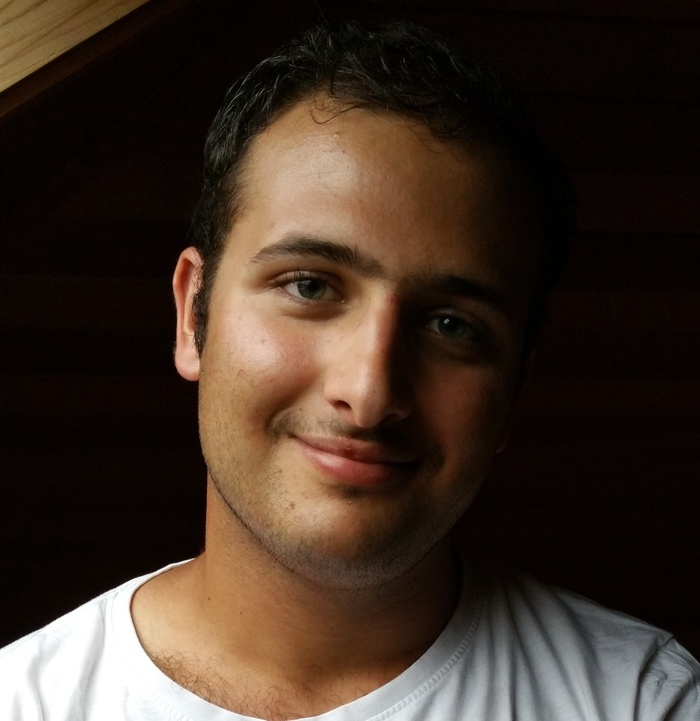
Jeremy Szal was born in 1995 and was raised by wild dingoes, which should explain a lot. He spent his childhood exploring beaches, bookstores, and the limits of people’s patience. He’s the author of the Common trilogy from Gollancz, a space opera trilogy, which includes STORMBLOOD, BLINDSPACE, and WOLFSKIN, about a drug harvested from alien DNA that makes users permanently addicted to adrenaline and aggression. He likes writing about broken heroes looking for hope in dark worlds, found families, aliens, outcasts, and morally-grey heroes who don't always do the right thing, even when they want to.
He’s the author of over fifty science-fiction short stories, translated into six languages, published in many anthologies and podcasts. He was the fiction editor for Hugo-winning podcast StarShipSofa until 2020, where he has worked as audio producer with George R. R. Martin, William Gibson, Harlan Ellison and others.
He holds a rather useless BA in Film Studies and Creative Writing from the University of N.S.W. He carves out a living in Sydney, Australia where he drinks too much gin, watches too many weird films and makes too many dark jokes.